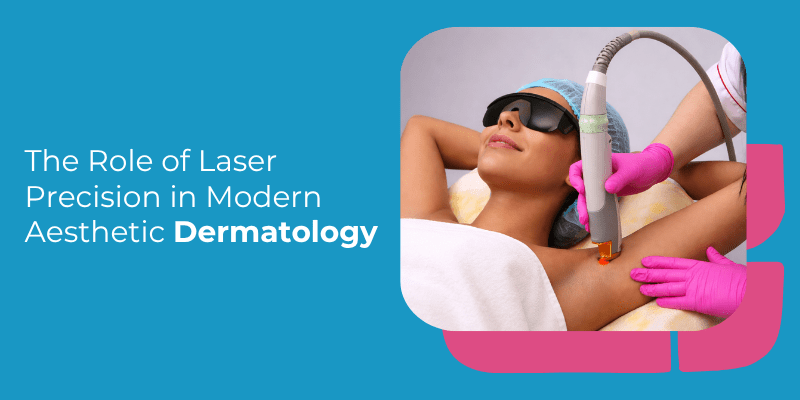
Aesthetic dermatology has witnessed a remarkable transformation due to the advancements in laser technology. In today’s aesthetic dermatology, doctors can use intense, monochromatic light to target specific skin components, such as hemoglobin, melanin, or water, during treatments. Dermatologists can address a wide range of skin conditions, and the key factor behind this progress is the laser precision. If you are looking for full-body laser hair removal in Ahmedabad, it’s first important to understand the science behind it and the role laser precision plays in modern aesthetic dermatology.
Let’s break down what makes laser precision so effective.
How Does Laser Technology Work?
In modern aesthetic dermatology, laser technology primarily operates on the principle of selective photothermolysis. It means that specifically tuned, light-to-high-intensity light is used to target blood, water, and pigments, also known as the skin’s precise chromophores. Laser technology emits concentrated beams of light at specific wavelengths, which are meticulously selected to interact with specific skin components. This allows dermatologists to treat different skin conditions with exceptional accuracy.
Key Roles of Laser Precision
Minimizing Discomfort and Downtime
Traditional dermatological procedures involve invasive techniques that require longer recovery periods. Today, laser treatments are minimally invasive, so patients do not experience severe discomfort and can return to their daily routine more quickly. The integrated cooling systems protect the epidermis during high-energy procedures. This minimizes the risk in darker skin tones and reduces discomfort.
Fractional Resurfacing
The modern fractional laser is considered the gold standard in laser skin resurfacing. It offers a perfect balance between safety, effectiveness, and recovery time. Fractional lasers deliver energy in pixelated patterns; microthermal treatment zones (MTZs) are tiny columns that penetrate the skin, leaving the surrounding tissues intact and promoting rapid healing.
Energy Density
Fluence, also called energy density, is one of the factors that contribute to laser precision. It defines the amount of energy delivered to a specific area of the skin. Based on the patient’s skin type, the targeted tissue depth, and the treatment goal, the dermatologist carefully adjusts energy levels. Higher fluences lead to greater destruction of target structures, while low energy density requires more sessions to achieve comparable results.
Conclusion
Dermatologists’ expertise plays a significant role in achieving true laser precision. While modern lasers are advanced, their safe and effective application requires deep knowledge of skin anatomy, laser physics, and the specific interaction between light and tissue, known as selective photothermolysis. So, ensure you choose an expert dermatologist for permanent laser hair removal in Ahmedabad.
 Dr. Kartik Slimming Clinic